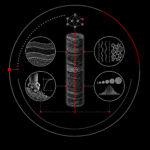
Epslog develops core digitalization equipment that transforms rock cores and drill cuttings into continuous, depth-aligned, AI-ready datasets through fast, non-destructive multi-sensor scanning, the CoreDNA™ solution. Epslog provides these technologies as core scanning services delivered worldwide or as equipment for direct client operations.
Traditional core analysis relies on sparse, discipline-specific measurements that leave much of the rock untested and make integration across scales difficult. CoreDNA™ changes this approach by establishing a continuous, objective and quantitative foundation from the very beginning of the core analysis workflow. By capturing the full range of rock variability before subsampling, it reduces sampling bias, guides more representative laboratory testing, and provides the framework to upscale sparse measurements into continuous property tracks that can ultimately be compared with wireline logs — significantly reducing uncertainty from core to well scale.

Rock cores are among the most valuable assets in subsurface characterization. They provide the most direct record of the reservoir, yet conventional workflows often reduce this wealth of information to a limited number of destructive subsamples—leaving much of the core’s continuous information unused.
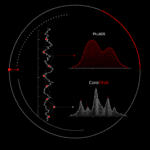
Sparse plug measurements characterize a reservoir from only a small fraction of the recovered core. Thin beds, facies transitions, and localized variations in porosity, permeability, mineralogy, or strength can easily be missed. Sampling may also introduce bias. The gaps are then filled by interpolation and geological assumptions—adding uncertainty to reservoir models and development decisions.
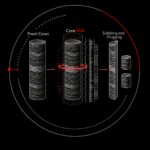
CoreDNA™ captures continuous quantitative information across geology, petrophysics, geomechanics, and sedimentology giving every discipline a fast, objective, and shared view of the core from the start of the workflow. For legacy cores, CoreDNA™ brings archived material back into the digital workflow, generating new datasets for field-scale integration, well-to-well comparison, and machine-learning applications.
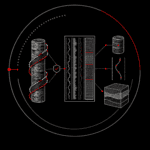
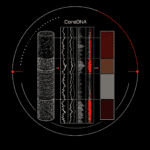
The resulting dataset is quality-controlled, integrated, and translated into interpretable rock facies and smart reports. CoreDNA™ helps specialists target representative samples, upscale laboratory measurements, and transform continuous core information into a more complete understanding of the subsurface.
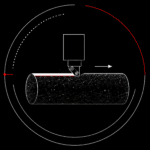
An integrated, multi-sensor digital core analysis workflow
CoreDNA™ gives core specialists more complete, more objective data earlier in the workflow without sacrificing the core.
CoreDNA™follows the same repeatable workflow for every project, whether the core has been recently acquired of belongs to a legacy collection.

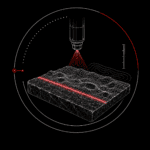
CoreDNA™ starts with the MiniSlab: a 3 cm-wide, dry-cut surface precision-machined continuously along the core axis. This fresh, level surface removes mud contamination, optimizes sensor-to-rock contact, and provides a consistent foundation for reliable, repeatable measurements from the very start of the core lifecycle.
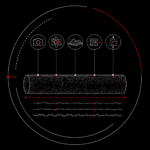
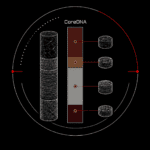
Proprietary algorithms are developed to use the continuous CoreDNA™ dataset to objectively identify the most representative sampling locations. The selection is tuned to the project objectives and to the needs of each discipline, ensuring that the full range of lithologies, facies and rock-property variability are covered while minimizing sampling bias.
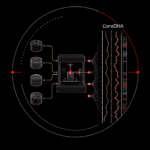
Continuous laboratory-property tracks derived through CoreDNA™ bridge the gap between sparse core measurements and wireline logs. This process reduces the uncertainty created by the large difference in rock volume consumed for laboratory testing versus wireline measurements, enabling a more consistent and objective comparison across scales.
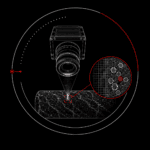
Better measurements start with a better surface. Most core scanning is performed directly on raw, irregular or potentially contaminated surfaces. CoreDNA™ starts one step earlier. A fresh, flat and clean 3 cm-wide measurement surface—theMiniSlab™—is machined along the core. This preparation is minimally invasive and preserves the core for subsequent laboratory sampling and analysis.
By reducing contamination, surface irregularities and variations in sensor-to-rockcontact, this controlled preparation improves measurement consistency and repeatability. It is an integral part of the CoreDNA™ workflow and a key differentiator from conventional core scanning.
For fresh whole cores, this preparation step is essential. For cores that have already been slabbed or split, it remains strongly recommended to remove saw marks, dust, oxidation and other surface alterations, restoring a clean, flat and reproducible measurement surface along the entire core.
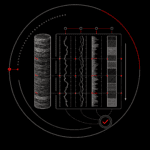
CoreDNA combines several co-located measurements into one continuous, depth-matched dataset. The exact configuration is tailored to each project and discipline; a typical deployment includes:
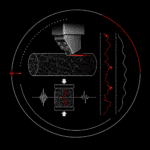
Core photography down to 1.8 µm per pixel fine enough to resolve individual grains.
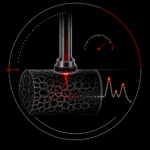
Laser scanning of the MiniSlab surface for precise geometry and texture.
Continuous elemental profiles for chemostratigraphy and mineralogical proxies.
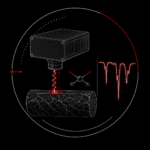
Infrared spectral measurements for mineralogical and compositional characterization, with particular sensitivity to clays, carbonates and organic-related features.
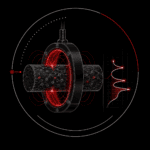
High-resolution magnetic susceptibility measurements to track variations in magnetic mineral content and support lithological and stratigraphic interpretation.
Compressional-wave (Vp) and shear-wave (Vs) velocities are measured along the core using ultrasonic transducers. These measurements provide insights into rock mechanical properties, while enabling the calculation of dynamic elastic properties and comparison with sonic wireline logs.
Every CoreDNA™ project is delivered as an integrated data package, cast into smart reports handed over online with LAS files bundled within days of acquisition. Typical deliverables include:
Beyond data delivery, Epslog’s specialists help your team interpret the results, integrate CoreDNA™ with other datasets, and turn the insights into more effective workflows.
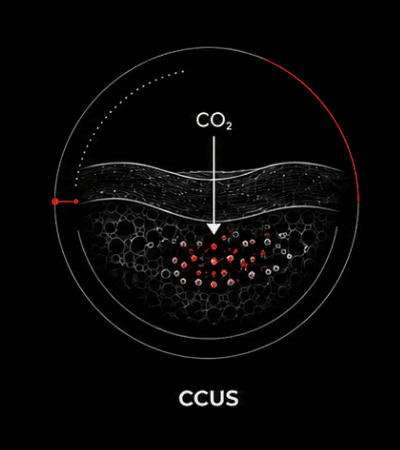
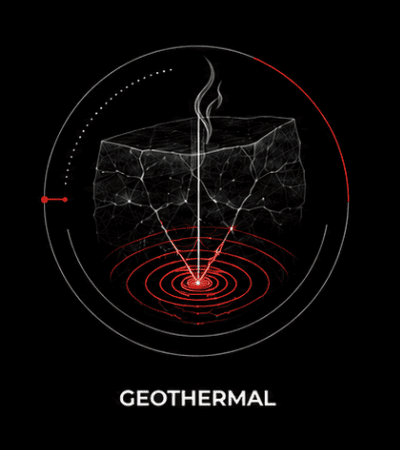
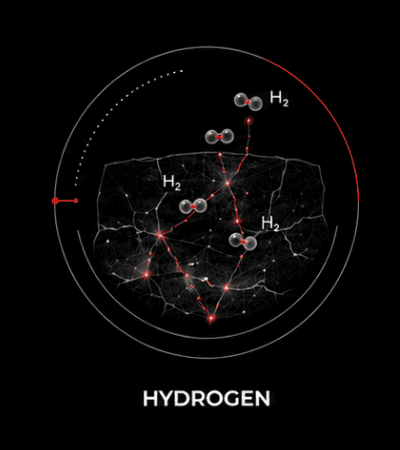
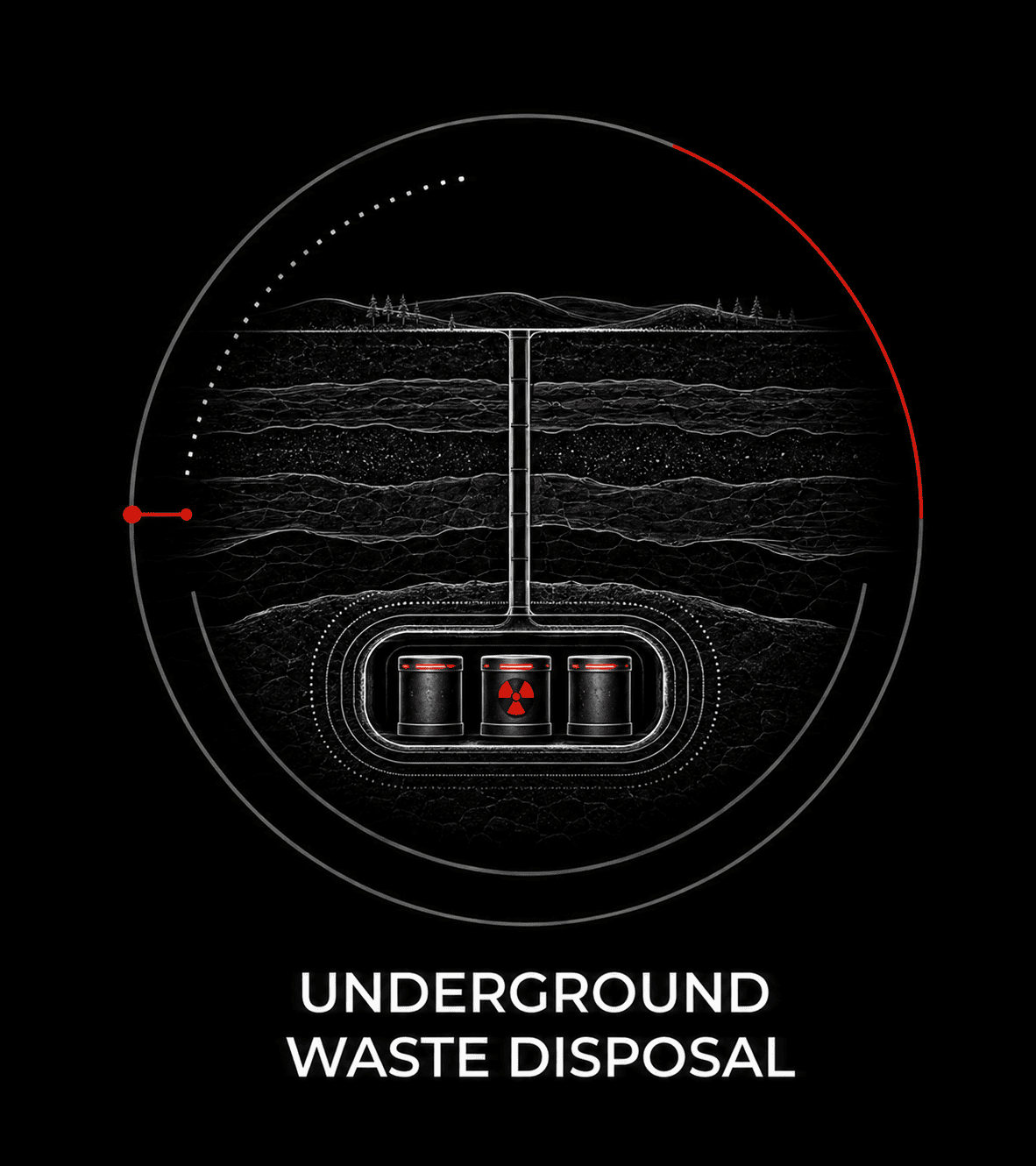
Proven first in oil & gas reservoir characterization, Epslog’s technology now supports the wider energy transition:
LithoLog is Epslog’s sedimentology software, built with expert sedimentologists. It applies a standardised digital grain-size card to ultra-high-resolution images, producing continuous grain-size curves accurate to the micron and reducing subjectivity in core description.
CoreDNA™ data is labelled and used to train deep-learning models that automate the identification of textures, structures and composition accelerating lithofacies classification across disciplines, from sedimentology to geomechanics.
Proven first in oil & gas reservoir characterization, Epslog’s technology now supports the wider energy transition:


Since 2005, Epslog has digitalized core for operators on five continents, with teams in Liège, Paris and Perth. CoreDNA™ has been featured in industry literature, including First Break’s special issue on digitalization and machine learning (February 2025).
CoreDNA™ gives core specialists more complete, more objective data, earlier, and without sacrificing the core:
Core digitalization is the process of turning a physical rock core into continuous, quantitative digital data using multiple sensors capturing geology, petrophysics, geomechanics and sedimentology in a single, non-destructive pass.
No. CoreDNA™ is acquired at barrel opening, before slabbing or plugging, so the core stays intact for any later laboratory work.
Yes. CoreDNA™ works on both freshly cut cores and legacy collections, letting operators extract new value from existing material.
CoreDNA™ includes integrated core preparation the MiniSlab as a standard step, optimising sensor-to-rock contact for more reliable, repeatable measurements than scanning raw surfaces.
QC and integration begin as soon as acquisition ends, and smart reports are typically handed over online within days.
See CoreDNA™ on your core. Request a confidential technical demonstration and talk to an Epslog specialist about your project.